Leeds United 2025-26 Full Squad, Caption, Coach, Kit, History and Stadium

The Leeds United 2025-26 squad combines experienced players with fresh talent as the team returns to the Premier League after a strong Championship season. The club has made smart signings to stay competitive in the top division, fixing past weaknesses and creating one of its most balanced teams in years. The roster, also called the Leeds lineup 2025/26, has strength in every position, from goalkeepers to forwards. Fans are especially excited about the new transfers that have strengthened the defense and midfield. This squad shows the club’s ambition to stay clear of relegation and aim for bigger goals. In this article, we cover every detail for both loyal fans and newcomers.
Leeds United Profile summary
| Team | Leeds United Football Club |
| Nickname(s) | The Whites, United, The Peacocks |
| Home Stadium | Elland Road |
| Stadium Capacity | 37,792 |
| Location | Leeds |
| Founded | 1919 |
| Website | http://www.leedsunited.com/ |
| League | EFL Championship 2025-26 |
| Manager | Jesse Marsch |
Leeds United 2025-26 players
| # | Player | Position | Age | Nat. | Contract | Market value |
|---|---|---|---|---|---|---|
| 1 | Illan Meslier | Goalkeeper | 25 | France | 30.06.2026 | €16.00m |
| 1 | Lucas Perri | Goalkeeper | 27 | Brazil / Italy | 30.06.2029 | €10.00m |
| 26 | Karl Darlow | Goalkeeper | 34 | Wales / England | 30.06.2026 | €200k |
| 21 | Alex Cairns | Goalkeeper | 32 | England | 30.06.2026 | €100k |
| 4 | Ethan Ampadu | Centre-Back | 24 | Wales / England | 30.06.2027 | €20.00m |
| 5 | Pascal Struijk | Centre-Back | 26 | Netherlands / Belgium | 30.06.2027 | €18.00m |
| 15 | Jaka Bijol | Centre-Back | 26 | Slovenia | 30.06.2030 | €18.00m |
| 6 | Joe Rodon | Centre-Back | 27 | Wales | 30.06.2028 | €10.00m |
| 23 | Sebastiaan Bornauw | Centre-Back | 26 | Belgium | 30.06.2029 | €6.00m |
| 3 | Gabriel Gudmundsson | Left-Back | 26 | Sweden | 30.06.2029 | €7.00m |
| 25 | Sam Byram | Left-Back | 31 | England | 30.06.2026 | €800k |
| 2 | Jayden Bogle | Right-Back | 25 | England | 30.06.2028 | €9.00m |
| 33 | Isaac Schmidt | Right-Back | 25 | Switzerland / Nigeria | 30.06.2028 | €2.20m |
| 18 | Anton Stach | Defensive Midfield | 26 | Germany | 30.06.2029 | €14.00m |
| 22 | Ao Tanaka | Defensive Midfield | 26 | Japan | 30.06.2028 | €10.00m |
| 44 | Ilia Gruev | Defensive Midfield | 25 | Bulgaria / Germany | 30.06.2027 | €5.00m |
| 8 | Sean Longstaff | Central Midfield | 27 | England | 30.06.2029 | €20.00m |
| – | Darko Gyabi | Central Midfield | 21 | England / Ghana | 30.06.2026 | €1.80m |
| 11 | Brenden Aaronson | Attacking Midfield | 24 | United States | 30.06.2027 | €15.00m |
| 17 | Largie Ramazani | Left Winger | 24 | Belgium / Burundi | 30.06.2028 | €7.50m |
| 29 | Wilfried Gnonto | Right Winger | 21 | Italy / Côte d’Ivoire | 30.06.2028 | €22.00m |
| 7 | Daniel James | Right Winger | 27 | Wales / England | 30.06.2029 | €18.00m |
| 38 | Jack Harrison | Right Winger | 28 | England | 30.06.2028 | €14.00m |
| 10 | Joël Piroe | Centre-Forward | 26 | Netherlands / Suriname | 30.06.2027 | €18.00m |
| – | Sam Greenwood | Centre-Forward | 23 | England | 30.06.2026 | €4.50m |
| 14 | Lukas Nmecha | Centre-Forward | 26 | Germany / England | 30.06.2027 | €3.00m |
| 9 | Patrick Bamford | Centre-Forward | 31 | England / Ireland | 30.06.2026 | €2.00m |
Leeds United Captain for 2025-26 Season
Ethan Ampadu has been appointed as the club captain, a role he earned through consistent performances. Named in July 2024, he continues into this season. Moreover, his impact during the promotion push was pivotal, leading by example. Ampadu’s versatility allows him to play in defense or midfield, making him indispensable. Additionally, vice-captains Pascal Struijk and Illan Meslier support him, ensuring leadership across the pitch. This setup fosters team unity, crucial for Premier League challenges. Fans appreciate Ampadu’s passion, which mirrors the club’s ethos. Furthermore, his appointment signals a focus on youth and long-term stability.
Leeds United Coach: Daniel Farke
Daniel Farke remains at the helm as manager, guiding Leeds back to the Premier League. Appointed in 2023, he secured promotion with a Championship title in 2025. Moreover, his tactical acumen emphasizes possession-based football with high pressing. Farke previously won the Championship twice with Norwich, bringing proven expertise. Additionally, despite early speculation, club chairman Paraag Marathe confirmed his continuation. Farke’s approach integrates new signings seamlessly, as seen in pre-season. Furthermore, he focuses on player development, nurturing talents like Mateo Joseph. Under Farke, the team exhibits discipline and flair, setting a positive tone for the season.
Leeds United Kit for 2025-26
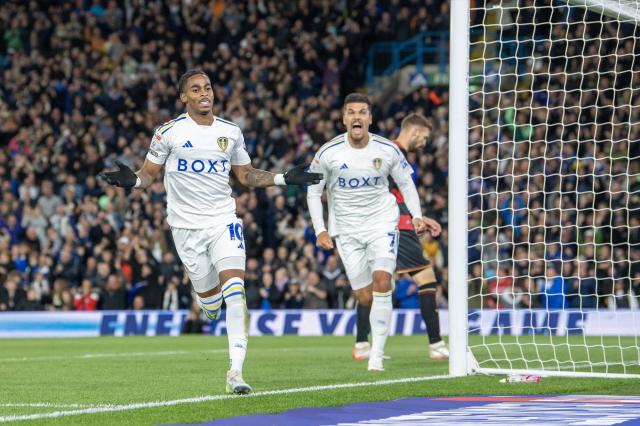
The 2025-26 kits by Adidas blend tradition with modern design, exciting fans worldwide. The home kit features white with blue stripes and a yellow-blue tile pattern on cuffs and collar. This nods to Elland Road’s tunnel aesthetics. Moreover, the away kit celebrates European history, incorporating subtle motifs from past glories. The third kit stands out with abstract blue and yellow patterns on a dark base, inspired by matchday rituals. Additionally, all kits use AEROREADY technology for comfort. Launched in July 2025, they symbolize the club’s return to elite football. Fans can purchase them online or at the stadium shop.
Key Features of Leeds United 2025-26 Kits
- Home: Classic white, tile-inspired details for heritage touch.
- Away: European-themed, evoking memorable continental campaigns.
- Third: Bold dark design, perfect for away clashes.
These kits not only look sharp but also boost team identity.
Leeds United History
Early Days
Leeds United’s predecessor team, Leeds City, was formed in 1904 and elected a member of the League in 1905. At first, it was difficult to attract large crowds to Elland Road, but the club grew thanks to the arrival of Herbert Chapman, who in 1914 reached say that: “This city was built to support first-rate football”. Leeds City’s growth was going well until 1919, when it was forced to disband, selling all its athletes, as punishment for allegations of illegal payments to players during World War I. Still, in 1919, Leeds City was recreated, now as Leeds United, having been invited to join the Midland League from 31 October, taking the vacant place left by the Leeds City reserves. Following the dissolution of Leeds City, the Yorkshire Amateurs bought Elland Road Stadium and offered to make way for the new team, under the management of former player Dick Ray.
Huddersfield City Mayor Hilton Crowther loaned Leeds United £35,000, to be repaid when Leeds United was promoted to the top flight. He also brought in Barnsley manager Arthur Fairclough, who took over management in 1920 with Dick Ray as his assistant.
First years
On May 31, 1920, Leeds United begins to play in the Premier League. Obtaining over the following years a position in the Second Division, until in 1924, after winning the title, he was promoted to the First Division. In the 1946-1947 season, after the war, Leeds was relegated again with the worst league record in their history.
The team remained in the Second Division, until 1955-1956, when they once again gained promotion to the First Division, thanks to the talented John Charles, who would later be sold to Juventus, which would result in further relegation in 1959-1960.
1961-1975: Era Don Revie
In March 1961, the club appointed former player Don Revie as manager, following the sacking of Jack Taylor. His administration began under adverse circumstances; with the club again in financial difficulties, it only escaped being relegated to the third division again in the 1961-62 season, thanks to the only victory, in the last game of the season. Revie implemented a restructuring policy, including an all-white uniform change in Real Madrid style, bringing the club back into promotion to the top flight in 1963–64.
In his 13 years in charge, Revie has guided Leeds to two First Division football championship titles, an FA Cup, a League Cup, two City Cups, a Football League Second Division title, and a Charity Shield, reaching finals and semi-finals of many other major tournaments such as the UEFA Champions League.
1975–1988: Post-revision era
After the 1973-74 season, Revie left Leeds in 1974 to manage the England team. Brian Clough was appointed as Revie’s successor, which was a surprise as Clough had been a staunch critic of Revie and the team’s tactics. Clough’s tenure as manager started poorly, with a Super Cup loss against Liverpool, in which Billy Bremner and Kevin Keegan were sent off for fighting. After a succession of weak starts, Clough was sacked after just 44 days.
Clough was eventually replaced by former England captain Jimmy Armfield, who after reverting to Revie’s old tactics led the team to the 1974–75 European Cup final when they were beaten by Bayern Munich in controversial circumstances. The manager rebuilt the Revie side which, although no longer dominating English football, remained in the top ten for the following seasons. However, impatient with the delayed success of the team, Armfield was sacked, starting a string of signings, Stein, Adamson, Clarke, Gray, and Bremner, all to no avail, sending the team back, once again, to the Second Division.
1988-1996: Howard Wilkinson era
In October 1988, with the team in 21st place in the Second Division, Bremner was sacked to make way for Howard Wilkinson, who led the team back to the First Division in 1989–90. Under Wilkinson Leeds finished fourth in 1990-91 and in 1991-92 won the title. However, in the 1992–93 season, Leeds exited the Champions League in the early stages, finishing 17th in the League and narrowly avoiding relegation.
Wilkinson stayed on until the 1996-1997 season when he was sacked following a loss to Manchester United. Wilkinson left a fantastic legacy, including the club’s youth ranks that have provided the team with great players to this day.
1997-2001: Graham and O’Leary
Leeds named George Graham Wilkinson’s successor. This appointment was controversial, as Graham had previously received a one-year suspension from the Football Association for receiving illegal payments from a football agent. George Graham led Leeds to the final in the years 1997-1998, qualifying them for the UEFA Cup after the season. In October 1998, Graham left the club to become manager of Tottenham Hotspur, prompting Leeds to appoint his assistant, David O’Leary.
Under O’Leary, Leeds United never finished outside the top 5 in the Premier League and secured qualification for both the UEFA Cup and UEFA Champions League. However, during the same period, the team’s image was tarnished when players Jonathan Woodgate and Lee Bowyer were involved in an incident that left an Asian student in hospital with serious injuries. The resulting court case took nearly two years to resolve; Lee Bowyer was exonerated and Jonathan Woodgate was sentenced to community service. Also, in the UEFA Cup semi-final against Galatasaray in Istanbul, two fans were stabbed to death before the match.
2001–2007: Financial implosion and downgrades.
In the early 2000s, Leeds began borrowing heavily, not having enough money to pay them off, the first indication that the club was in financial trouble was the sale of Rio Ferdinand to Manchester United for around £30,000. 000 The crisis ended up getting worse when Leeds United fired O’Leary and hired Terry Venables, when the team started to play badly, and even sold some of its most important players like Jonathan Woodgate, in addition to other players that the president had promised the coach would not be released.
After these controversies and low results, the two left their positions, leaving the team in the danger zone, managing after Peter Reid’s arrival, to remain in the first division. An unsuccessful start to the 2003–04 season saw Peter Reid sacked, and Eddie Gray took over as caretaker manager until the end of the season. An insolvency specialist, Gerald Krasner, led a consortium of local businessmen, which took over Leeds and oversaw the sale of club assets, including high-profile and emerging young players of any value. Leeds were relegated during the 2003–04 season. After relegation to the Championship, Kevin Blackwell was named manager. Most of the remaining players were sold or released to further reduce high salaries; Blackwell was forced to rebuild almost the entire squad through free transfers, and Leeds United was forced to sell both their training ground and stadium in the autumn of 2004.
With the team performing poorly, Blackwell’s contract was terminated, and the team hired John Carver as caretaker manager, but the gamble was not a success and he was fired from his duties with Dennis Wise announced as his replacement. Sensible he was unable to get the team out of the relegation zone for much of the season, despite bringing in a number of experienced players and free borrowers on short-term deals. With relegation virtually assured, Leeds United still lost points in the league-leading to yet another relegation, this time to the Third Division.
2007-2010: League One
After a succession of management and player negotiation problems, the team managed to play in the third division, starting the championship with 15 negative points, which did not prevent the team from reaching the play-offs, under the orders of Dennis Wise. who left before the end of the league for Newcastle United, was replaced by former club captain Gary McAllister. They reached the final but ended up being beaten by Doncaster Rovers.
The following season saw a series of poor results and McAllister was fired after a 5 match-losing streak. McAllister was replaced by Simon Grayson, who resigned from him at Blackpool to take over at Leeds United. The team reached the play-offs once again and were beaten in the semi-finals by Millwall.
In the 2009-10 season, Leeds got the best start to the season and caused the big upset in the third round of the FA Cup by beating Manchester United at Old Trafford. After the impressive FA Cup campaign, the team suffered, with the team scoring just 7 points out of a possible 24.
However, the team outdid themselves and finally gained access.
2010-2019: return to the second division
On their return to the Second Division, they spent much of the season in the play-off qualifying zone but ended up one place lower.
In May 2011 it was announced that chairman Ken Bates had bought the club and become the owner of Leeds United before the game against Middlesbrough.
The crowd ended up protesting and the president responded to the criticism by insulting the fans. In 2012 the club was sold to a Middle Eastern company, GFH, who would sell the team again in 2014 to the Eleonora Sport Ltda group, owned by the same owner of the Italian team Cagliari Calcio, who is represented by Massimo Cellino.
2014-2017: The period of Massimo Cellino
After the acquisition of Eleonora Sport Ltda, the club remained ostracized. Although they did not risk relegation, Leeds had no illusions about anything, always appearing from midfield to the bottom of the table.
To make matters worse, the Italian Massimo Cellino was sanctioned by the Football League after being sanctioned in the Italian courts for tax evasion, being forced to stay away from the club’s management until April 2015.
On January 4, 2017, Italian businessman Andrea Radrizzani purchased a 50% stake in the club from Massimo Cellino. This season, Leeds was in the Playoff position for most of the season. However, the team dropped in performance in recent days and finished seventh, outside the playoff qualifying zone. In addition, Leeds had been eliminated in the fourth round of the F.A Cup by Sutton United, a fifth-division team.
2017-2018: The Radrizzani era and the revival of Elland Road
On 23 May 2017, Radrizzani announced the purchase of 100% of Leeds United’s shares, purchasing the remaining 50% from the previous co-owner Massimo Cellino, thus assuming full ownership of the club. Manager Garry Monk has resigned as head coach after a season at the club in which he guided them to seventh place. In June 2017, former Spain international Thomas Christiansen was announced as Leeds’ new manager. Also in June, Radrizzani completed the purchase of Elland Road, returning the stadium to the club which it had not owned since 2004 due to financial problems. On February 4, 2018, Thomas Christiansen was sacked after a series of poor games, leaving the team in 10th place in the Championship. On February 6, Paul Heckingbottom was confirmed as Christiansen’s replacement.
On May 24, 2018, Leeds announced that 49ers Enterprises (the company that manages the San Francisco 49ers football team) had bought shares in the club to become a minority investor. On June 1, 2018, Leeds sacked Heckingbottom and he only lasted four months in the role. To take his place, on June 15, Leeds announced the signing of Argentine manager Marcelo Bielsa, signing a two-year contract with the option of a third year, becoming the highest-paid manager in Leeds United history.
2018-present
It is undeniable that Bielsa’s move to Leeds was one of the most random things that could happen, after all, a brilliant, revolutionary coach, but with little luck, he went to the second division, although he knew he had a market in the first. divisions of other leagues. But the Argentine bought into the idea, made the request for him and the club responded immediately. Leeds’ ambition was surprising. The fans believed in the project and after many years, the city in the north of England breathed football again. The Argentine rescued football from the city and the hope of his fans.
In the first season, Leeds presented the best football in the Championship, perhaps in all of England, it was the work of Marcelo Bielsa put into practice. The team spent almost the entire championship alternating between the lead and second place, occasions in which they secured a direct return to the first division. However, Leeds lost strength in the final stretch and finished in the third position, having to play the playoffs. Arriving at the decisive stage, in the first game, victory over Derby County. The advantage built away from home meant that Leeds needed only a draw at Elland Road, but ended up suffering a heavy 4-2 defeat in front of their fans and postponing, once again, the dream of returning to the Premier League.
The tragic end of the 2018-2019 season made many think: “Will Bielsa stay?” To the delight of all the fans, Marcelo Bielsa announced that he would stay in Leeds. The 2019-2020 season begins, and Leeds starts well again, managing to be among the top two in November, never to leave. Even with a drop in the boxing day period (which is a team tradition), Leeds returned to winning streaks and took the lead in the Championship until the coronavirus break.
After the return leg on June 21, 2020, Leeds continued with that entertaining and attractive football, very much in the Bielsa style, but ended up being defeated by Cardiff. That didn’t let up, the team rallied to beat difficult Fulham 3-0 and hold on to the dream. On July 17, 2020, the story is told. After West Brom’s loss to Huddersfield, Leeds United officially qualified for the Premier League after 16 years. The next day the party was even bigger. With Brentford losing 1–0 to Stoke City, Leeds, as well as returning to the top division, still won the EFL champions title for the fourth time in their history, without having to take the pitch.
Leeds United Home Stadium
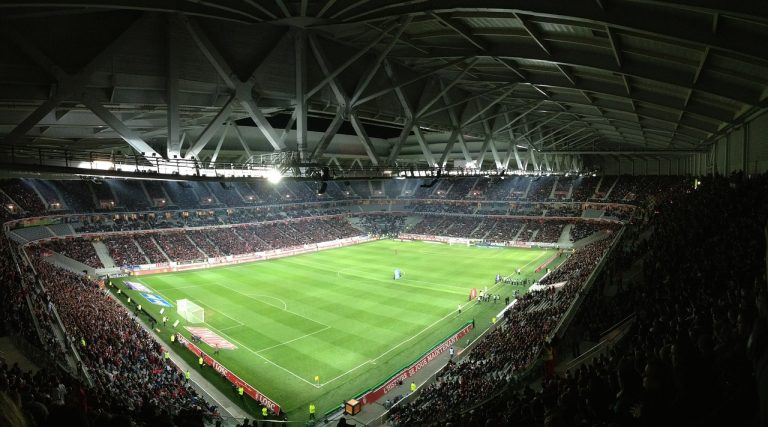
The team plays its matches at its own Elland Road stadium, located in the city of Leeds, which has a capacity of 37,890 people.
The attendance record is 57,892 fans on 15 March 1967 for the FA Cup against Sunderland. After stadium improvements and Taylor Report security adjustments, the record stands at 40,287 for the Premiership against Newcastle United on 22 December 2001.
It was one of the stadiums used in Euro 1996 and has hosted several concerts by bands such as U2, Kaiser Chiefs, and Queen.
The stadium was built in 1887 and remodeled five more times, in 1920, 1953, 1971, 1994, and 2006.
Rivalries
Leeds’ biggest rivalry is with Manchester United, a classic titled “War of the Flowers”, due to the traditional rivalry between the counties of Lancashire and Yorkshire. Millwall and Sheffield United are singled out as the second and third biggest rivals by Leeds fans.
Another Leeds rivalry is with Turkish club Galatasaray after two Leeds fans were killed by Galatasaray supporters before a UEFA Cup match in April 2000. When former Leeds player Harry Kewell moved to Galatasaray in 2008, caused quite a stir among Leeds fans.
There are also historical rivalries with its regional neighbors.
Leeds United world rankings
at # 316
Leeds United trophies
League
- First Division/Premier League
- Champions (3): 1968–69, 1973–74, 1991–92
- Runners-up (5): 1964–65, 1965–66, 1969–70, 1970–71, 1971–72
- Second Division/Championship
- Champions (4): 1923–24, 1963–64, 1989–90, 2019–20
- Runners-up (3): 1927–28, 1931–32, 1955–56
- Play-off runners-up: 1986–87, 2005–06
- Third Division/League One
- Runners-up: 2009–10
- Play-off runners-up: 2007–08
Cup
- FA Cup
- Winners: 1971–72
- Runners-up: 1964–65, 1969–70, 1972–73
- EFL Cup
- Winners: 1967–68
- Runners-up: 1995–96
- FA Charity/Community Shield
- Winners: 1969, 1992
- Runners-up: 1974
European
- European Cup/Champions League
- Runners-up: 1974–75
- UEFA Cup Winners Cup
- Runners-up: 1972–73
- Inter-Cities Fairs Cup
- Winners: 1967–68, 1970–71
- Runners-up: 1966–67
- Trophy play-off runners-up: 1971–72
FAQs
Who is the captain of Leeds United for the 2025-26 season?
Ethan Ampadu serves as the club captain, appointed for his leadership and performances. He is supported by vice-captains Pascal Struijk and Illan Meslier.
What are the new kits like for Leeds United 2025-26?
The home kit is white with blue stripes and tile patterns. The away celebrates European history, while the third features bold blue-yellow abstracts on dark fabric, all by Adidas.
What updates are happening at Elland Road stadium?
Leeds submitted plans in July 2025 to expand capacity to 53,000. This includes modern facilities and public realm improvements, aiming for completion in coming years.
Conclusion
The Leeds United 2025-26 squad is poised for an exciting Premier League season, blending youth, experience, and strategic signings. With Ethan Ampadu leading as captain, Daniel Farke’s tactical expertise, and a refreshed roster, the team is well-equipped to compete. Moreover, the stylish Adidas kits reflect the club’s heritage while embracing modernity. Elland Road’s planned expansion signals ambition, promising an enhanced matchday experience. Furthermore, Leeds United’s rich history fuels optimism for a successful campaign. As the season unfolds, fans can expect passion, resilience, and moments of brilliance from this dynamic Leeds United 2025-26 squad.
Source: FootballArroyo.co.uk